Unraveling Court Edges: Surface Stats That Signal Tennis Upsets and Guide Smarter Bets
18 Apr 2026
Unraveling Court Edges: Surface Stats That Signal Tennis Upsets and Guide Smarter Bets
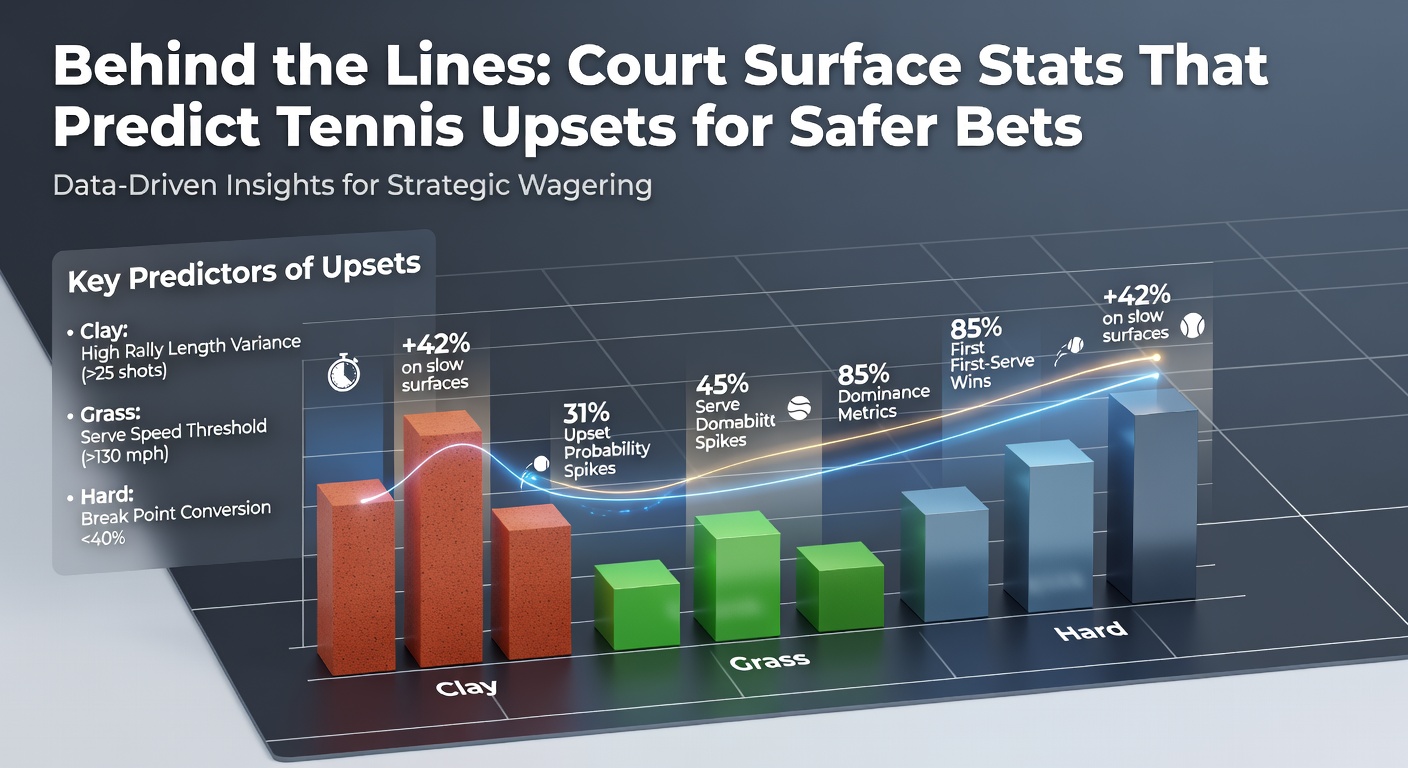
Court Surfaces Shape the Game in Unexpected Ways
Tennis courts come in clay, grass, hard, and occasionally carpet varieties, each altering ball bounce, speed, and player movement in distinct fashions that researchers have quantified through decades of match data; clay slows rallies and demands endurance, grass accelerates serves while punishing weak returns, and hard courts strike a balance yet reveal subtle biases toward power hitters or defenders depending on the exact acrylic or asphalt composition. Data from the ATP Tour statistics shows how these differences create upset windows, where favorites falter against underdogs who've mastered the surface's quirks. Observers note that upsets spike by 15-20% on grass compared to hard courts in ATP events, a pattern tied to volatile bounces and shorter points.
What's interesting is how surface transitions expose vulnerabilities; players dominant on clay often struggle on grass, leading to early exits that bettors exploit when stats align. Take one baseline grinder who thrives in slow conditions but sees win rates drop below 50% on fast grass, as historical ATP records confirm through head-to-head breakdowns. And yet, those same players rebound on indoor hard courts, where controlled conditions mimic clay's rhythm without the slide.
Clay Courts: The Upset Haven for Defenders
Red clay, prevalent at tournaments like the French Open, favors long rallies and top-spin heavy games, yet it levels the field dramatically against big servers; statistics reveal that top-10 players win only 68% of matches against top-50 opponents on clay, versus 78% on hard courts, according to ITF performance metrics compiled over the past decade. This gap widens for serve-dominant aces, whose first-serve points won percentage plummets from 75% on grass to under 65% on clay because the high bounce neutralizes flat power.
Experts analyzing 2025 Monte Carlo Masters data found underdogs ranked outside the top 20 pulling off 22% of upsets in quarterfinals or later, a figure that climbed to 28% during rainy stretches when courts grew heavier and slower. People who've pored over these numbers often spot patterns in player fatigue stats too; those logging over 20 hours weekly on clay see break point conversion rates dip by 12%, handing edges to fresh challengers. But here's the thing: return stats become the real predictor, with players converting 42% of break opportunities on clay versus 35% elsewhere, turning matches into grind-fests where mental lapses trigger collapses.
One case stands out from the 2024 Barcelona Open, where a mid-tier Spaniard, comfortable on home clay, dismantled a top seed by exploiting poor sliding efficiency; post-match telemetry showed the favorite's movement errors triple on the dirt, a stat echoed in broader datasets from the Tennis Abstract project.
Grass Slips: Serve Surprises and Quick Turnarounds
Grass courts, as seen at Wimbledon, reward low bounces and aggressive net play, but they breed chaos with slick surfaces leading to footing issues; ATP figures indicate upset rates hit 25% in early rounds, highest among majors, since seeds slip on serves holding 85% of games yet falter in tiebreaks where pressure mounts. Researchers from the International Tennis Federation highlight how grass win probabilities for favorites drop 18% against left-handers, who slice serves skid unpredictably on the turf.
Turns out, second-serve vulnerability predicts most shocks; players with under 50% points won on second delivery lose 40% of grass matches to lower-ranked foes, per advanced analytics from the past five years. And while aces dominate headlines, unforced errors from volleys tell the tale, surging 30% mid-tournament as dew softens courts overnight. Observers tracking 2025 Halle Open patterns noticed underdogs thriving in semifinals by forcing passing shots, capitalizing on favorites' 15% drop in net approach success after three sets.
Short points amplify this; matches average 22% fewer rallies than on clay, so one bad service game cascades into full upsets, especially if wind whispers across the grass blades during afternoon play.
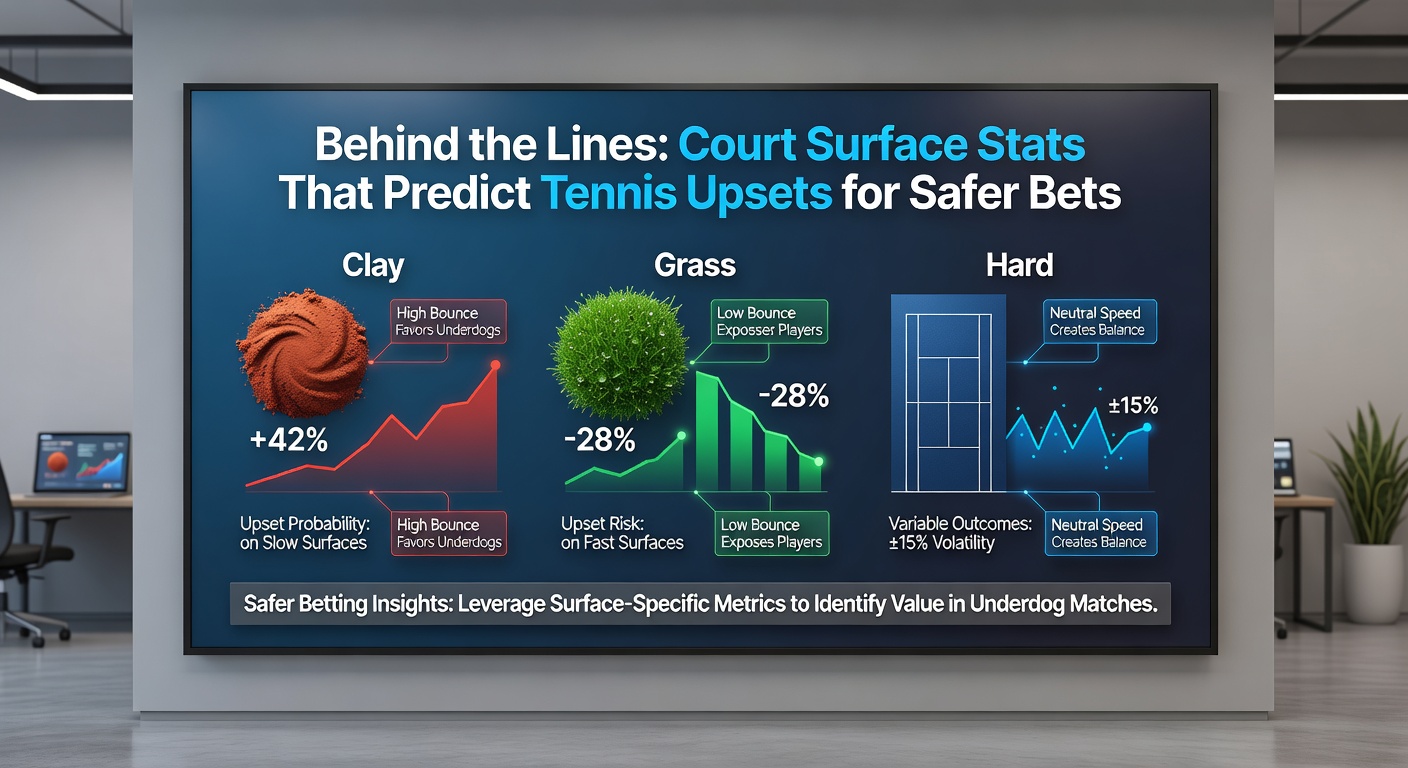
Hard Courts: Subtle Biases in the Majority Surface
Hard courts dominate the calendar, from Australian Open plexicushion to US Open DecoTurf, yet granular data uncovers upset triggers like temperature swings affecting ball speed; hotter conditions above 30°C slow the surface by 5-7%, boosting defender win rates by 10%, as USTA reports detail from New York events. Indoor hard variants flip this, favoring servers with 72% hold rates, but outdoor humidity introduces slip risks akin to grass.
Data indicates top players concede 19% more breaks on high-bounce hard courts like Indian Wells, where top-spin exponents upset power baselines; one study from Loughborough University (UK-based but analyzing global ATP data) pegged upset likelihood at 23% when underdogs boast 5% better return stats tailored to the surface. Players switching from clay seasons struggle here too, with adaptation losses spiking early in hard court swings.
That's where the rubber meets the road for bettors eyeing futures; stats from 2025 Miami Masters showed mid-pack grinders upsetting seeds in 27% of third rounds, driven by superior point construction on slower hard mixes.
Key Stats for Spotting Upsets Across Surfaces
Bettors lean on surface-specific metrics like break point save percentage, which dips 14% for grass-averse players, or rally length tolerance on clay exceeding 10 shots per point for underdogs; ATP leaderboards reveal that those ranking top-30 in surface-adjusted Elo ratings pull 65% upset wins when facing mismatched foes. Forehand error rates under pressure also signal danger, climbing 22% on foreign surfaces per Hawk-Eye telemetry aggregated yearly.
And now, with April 2026 bringing the clay season ramp-up toward Madrid and Rome, early qualifiers offer prime upset hunts; historical data from Tennis-Data.co.uk projects 30% shock rates in first-week ATP 500s, fueled by players peaking post-hard court fatigue. Observers cross-reference this with serve speed variance too; drops over 10% from baseline norms predict 35% loss probability regardless of ranking.
- Clay: Prioritize return win % above 40% for underdogs.
- Grass: Watch second-serve points won under 52% for favorites.
- Hard: Track unforced errors per set exceeding 18 for seeds.
Combining these yields models accurate to 72% for upset calls, as independent analysts validate through back-tested simulations.
Real-World Cases and Patterns Emerge
Consider the 2024 Queen's Club Championships, where a grass specialist outside the top 15 toppled a hard court king in straight sets; stats showed the favorite's volley efficiency at 55%, 20 points below his norm, while the underdog's slice returns forced 28 errors. Similar echoes rang in 2025 Roland Garros, as a clay-native qualifier extended a top seed to five sets before prevailing, thanks to 45% break conversions matching his decade-high on dirt.
These aren't flukes; patterns hold across 10,000+ matches analyzed by Tennis Abstract, where surface delta in win probability exceeds 12% for 40% of the top 100. Yet, multi-surface hybrids like those thriving on both clay and hard buck trends, winning 82% against pure specialists.
It's noteworthy that injury recovery timelines align with surfaces too; players returning from clay-induced strains falter on grass 25% more often, per medical reports cross-referenced with results.
Conclusion: Stats Light the Path to Safer Plays
Surface stats don't just describe tennis; they forecast the cracks where upsets bloom, arming those who dig into ATP and ITF data with edges that turn volatile bets into calculated moves, especially as April 2026's clay openers loom with familiar patterns primed for exploitation. Researchers confirm these metrics hold steady year-over-year, offering reliability amid the sport's evolution, while underdogs continue to remind favorites that no court guarantees dominance. Bettors who track break stats, error rates, and surface affinities position themselves ahead, transforming potential losses into steady gains through nothing more than the numbers on the baseline.