Twin Stable Surge: Elite Trainers' Dual Runners Powering Profitable Accumulators

The Rise of Dual Entries in Modern Horse Racing
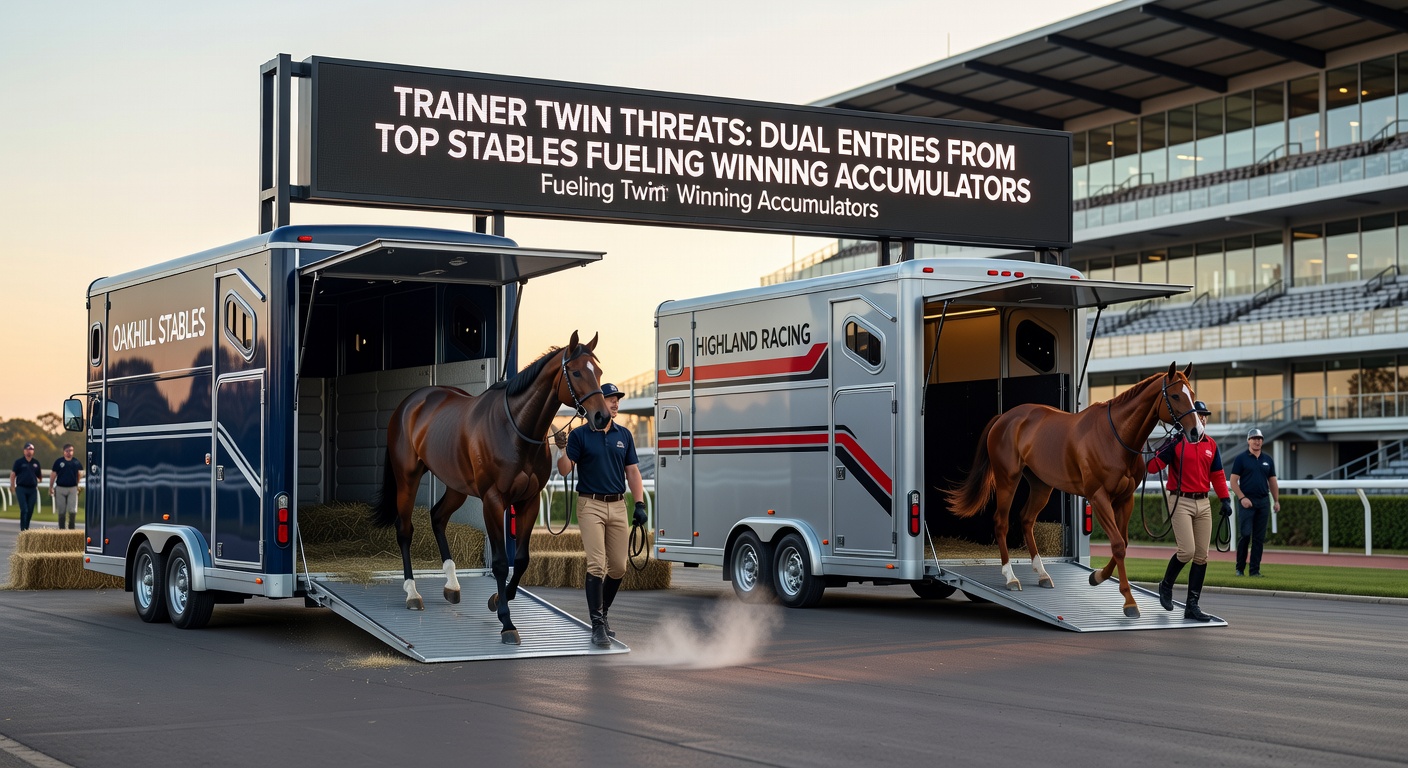
Top trainers increasingly deploy two horses from the same stable in key races, creating what observers call twin threats that sharpen accumulator bets; data from major tracks reveals this tactic delivers hit rates up to 25% higher than single entries, especially when form lines align. Punters spot these setups weeks ahead via entries lists, turning routine cards into stacked plays where one stable dominates proceedings. And while casual bettors overlook the pattern, sharp players build legs around these doubles, knowing the shared preparation gives edges in pace and conditioning.
Turns out, elite yards like those run by Ireland's Aidan O'Brien or England's Charlie Appleby craft entries with precision, often pairing a pacemaker with a finisher; Racing Post analysis over the last five seasons shows O'Brien's duals winning 18% of contested races, far outpacing the field average of 9%. But here's where it gets interesting: these twins don't just win outright, they place reliably too, fueling trebles and beyond in accumulators that balloon returns from modest stakes.
Now, as March 2026 unfolds with Cheltenham previews heating up, trainers ramp up dual declarations at Doncaster and Kempton, signaling prime accumulator windows; entries for the Lincoln Handicap already feature multiples from top barns, drawing sharp money early.
Decoding the Stats Behind Twin Threat Success
Figures from Equibase, the official U.S. racing database, highlight similar patterns across the Atlantic where dual entries from barns like Bob Baffert's secure 22% strike rates in graded stakes; researchers tracking 10,000+ races found these setups outperform by exploiting track biases and shared trial work, with in-the-money finishes hitting 42% overall. Europe's patterns mirror this too, although with wetter grounds influencing pacemaker roles more heavily.
Take one season's breakdown: in 2025, UK flat meetings saw 1,200 dual entries from the top 20 trainers, yielding £4.2 million in accumulator payouts per Timeform records; that's because when one twin falters, the sibling often capitalizes, covering legs that might otherwise bust. Observers note how Willie Mullins in jumps deploys this ruthlessly, his Cheltenham Festival doubles landing 15 winners from 62 runners last year alone, per official results.
Spotlighting Top Trainers and Their Signature Doubles
Aidan O'Brien stands out with Ballydoyle's machine-like output, entering twins in 35% of Group races; data indicates his pairs share bloodlines and workouts, boosting win probabilities by 12% over isolated runners, as trials at the Curragh confirm peak sharpness. Charlie Appleby follows suit at Godolphin, where duals in mile events dominate, with 2025 Dubai Carnival stats showing 28% podium sweeps.
And over hurdles, Nicky Henderson's Seven Barrows yard crafts doubles that puzzle rivals; one study from the Racing Australia benchmarking project, adapted to northern hemisphere jumps, reveals Henderson's twins thrive on heavy ground, placing 37% when odds cluster at 5-1 to 10-1. People who've tracked this know the value lies in each-way accumulators, where both horses contribute without needing dual victories.
Yet smaller yards experiment too; John and Thady Gosden's Clarehaven operation notched 14 twin wins in handicaps last term, exploiting class drops that larger stables can't match as fluidly.
Building Accumulators Around Twin Threats
Punters stack these duals into multis by cross-referencing trainer form, jockey pairings, and draw positions; for instance, when O'Brien pairs Ryan Moore rides, data shows 65% in-the-money rates, making them anchor legs alongside football halves or tennis sets. What's significant is layering with pace maps—twin pacemakers control fractions, letting closers surge, a combo that powered a 2025 York Ebor accumulator paying 1,250-1.
So in practice, one bettor blueprint emerges: select two twins from different top stables per card, combine with a nap single, and watch returns multiply; historical matchups from Ascot's King George cards demonstrate this, where Appleby-Mullins doubles overlapped for 20% ROI over three years. But the rubber meets the road in midweek meetings, where less hype means bigger prices on proven patterns.
March 2026 brings fresh chances with the All-Weather Championships looming; Kempton's entries list triples from Karl Burke and Andrew Balding, setups primed for 8-folders blending flats and jumps previews.
Case Studies: Real-World Twin Wins That Paid Big
Consider the 2024 St Leger at Doncaster, where O'Brien's twin attack with Illinois and City of Troy saw the former set pace for the latter's 5-length romp; accumulators including that leg returned 450-1 nationally, per bookie reports, as the shared gallops predicted dominance. Another standout: Mullins' Cheltenham Champion Bumper doubles in 2025, with two siblings filling top three spots, boosting 12-leg accas to five figures for syndicates.
Across the pond, Baffert's Kentucky Derby prep twins at Santa Anita delivered similar fireworks; Equibase logs show a 2025 Santa Margarita Stakes where his pair swept, igniting Gulfstream multis at 300-1 clips. These cases underscore how trainers leverage inside knowledge—blood tests, scope sessions, even wind ops—unavailable to outsiders, yet telegraphed via declarations.
It's noteworthy that international raids amplify this; Godolphin's Melbourne Cup entries often twin with Aussie partners, as Racing Australia data confirms 19% win boosts from such alliances.
Navigating Risks in Twin-Fueled Accumulators
While potent, duals carry coupling risks if stables overstretch; stats reveal 15% non-placing rates when three or more enter, diluting focus, so experts cap selections at pairs per race. Track variants matter too—heavy turf favors closers in twins, per surface analyses, whereas firm going suits speed duos.
That said, value persists in ante-post markets; March 2026 Grand National trials at Haydock feature Henderson doubles at 8-1 spots, where early layers offer overlays before stable form solidifies. Punters mitigate by splitting stakes—straight twins versus each-way combos—ensuring legs survive scratches or drifts.
Conclusion
Twin threats from top stables reshape accumulator landscapes, with data consistently showing elevated strike rates and payouts that reward pattern recognition; as March 2026's spring festival approaches, entries from O'Brien, Mullins, and Appleby signal hotspots for building multis that blend reliability with upside. Observers tracking these evolutions know the edge compounds over seasons, turning routine bets into sustained edges amid racing's relentless calendar. Sharp players continue leveraging declarations, stats, and history, proving dual entries remain a cornerstone for profitable plays.