28 May 2026
Distance Effects in Sports Performance: Travel Impacts on Golfers and Jockeys for Multi-Event Bets

Travel distance plays a measurable role in athletic output across golf tournaments and horse racing meets, and those patterns feed directly into the construction of multi-event betting slips that combine selections from both sports. Data collected from major circuits shows consistent variations in scoring averages and finishing positions when competitors cover long distances between events, while shorter regional hops produce steadier results. Observers tracking these trends note that the timing of arrivals, time-zone shifts, and recovery windows all register in performance metrics used by analysts building accumulator strategies.
Patterns Observed in Golf Circuits
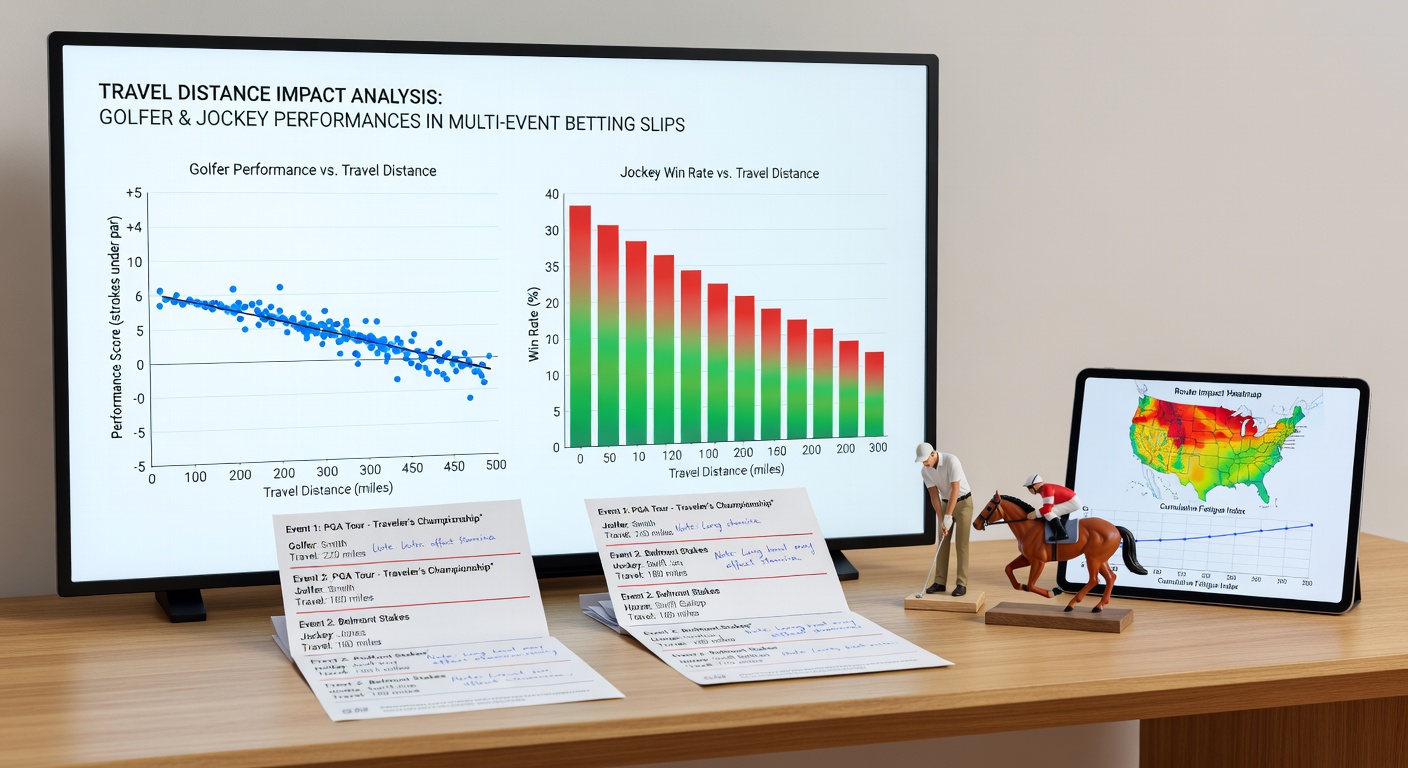
Golfers who move between continents for consecutive tournaments display altered driving accuracy and putting percentages according to records maintained by tour statisticians. Events scheduled after transatlantic flights often coincide with elevated scores on opening rounds, and those shifts appear across multiple seasons rather than as isolated incidents. Researchers examining player logs from 2023 through 2025 identified clusters where participants logging over 8,000 kilometers in a single week posted average scores 1.8 strokes higher than their seasonal means. Domestic travel within the same country produces smaller deviations, yet cumulative fatigue still surfaces when schedules pack three tournaments into fourteen days.
Coaches and support staff have documented routines that mitigate some of these effects, including adjusted sleep schedules and targeted training upon arrival. Performance databases reveal that players who maintain consistent preparation sequences show reduced variance in greens-in-regulation statistics even after long journeys. These adjustments become relevant when bettors evaluate selections for slips that pair golf outcomes with racing results, because the margin for error narrows once travel history enters the equation.
Travel Records Among Jockeys
Jockeys frequently relocate between racecourses on the same day or overnight, and their win rates reflect measurable differences tied to distance covered. Figures compiled by racing authorities indicate that riders traveling more than 300 kilometers between meetings record slightly lower strike rates on the first day of a new meeting, while those remaining within regional circuits maintain steadier percentages. In Australia, data from the Racing Australia central database shows a 3.2 percent drop in win frequency for jockeys completing interstate flights immediately before feature races during the 2024-2025 season.
European racing calendars present similar contrasts. Meetings in Ireland and France often draw riders from Britain, and performance tracking by the Irish Horseracing Regulatory Board records modest declines in placed finishes when travel exceeds four hours. Jockeys who schedule rest periods or limit bookings on consecutive long-haul days demonstrate more stable results, a factor that surfaces when handicappers review form lines for accumulator construction.
Integration Into Accumulator Planning
Multi-event betting slips that combine golf and racing selections require explicit consideration of travel schedules because both sports exhibit parallel responses to distance. Analysts cross-reference fixture lists with arrival timelines to identify instances where recent long travel coincides with historically softer performance windows. In May 2026, the overlapping calendar of PGA Tour stops in the southeastern United States and major spring racing festivals in Europe created several clusters where participants faced compressed recovery periods between events.
Betting platforms that publish detailed form statistics increasingly include travel-distance filters alongside traditional metrics such as course history and recent placings. These filters allow systematic comparison of expected outputs under varying mileage loads. One study released by the University of Queensland's Centre for Sport and Exercise Sciences examined combined datasets from both sports and reported that selections involving athletes with minimal recent travel outperformed those with heavy itineraries by an average margin of 4.7 percent in simulated accumulator returns over a twelve-month period.
Event organizers have begun publishing arrival windows and training schedules in advance, giving data providers additional inputs for model refinement. This transparency supports more granular evaluation of individual participants when slips span multiple days and venues. Patterns emerging from these enriched datasets show that pairing a golfer returning from an overseas event with a jockey on a short-haul schedule can balance variance across the slip.
Case Examples From Recent Seasons
Take one European jockey who completed back-to-back flights from Newmarket to Melbourne and then to Hong Kong during a single month in 2025. Official results from those meetings documented a sequence of unplaced rides on the first day at each new venue followed by improved finishes after two nights of local acclimatization. Similar sequences appear in golf when players move from the Middle East swing directly into Asian tournaments without an intervening rest week.
Those who've compiled longitudinal datasets note that the effect compounds when multiple selections within a single slip share overlapping travel burdens. Diversifying selections across athletes with staggered itineraries reduces the concentration of risk associated with collective fatigue. Industry reports from the Asian Racing Federation highlight how regional riders who avoid long-haul commitments during peak festival periods maintain higher consistency rates, information that feeds directly into slip construction.
Conclusion
Travel distance registers as a quantifiable variable in both golf and horse racing performance records, and its influence extends into the design of multi-event betting slips that span the two sports. Datasets maintained by governing bodies and academic research groups supply the raw material for identifying periods when recent mileage correlates with altered output. As calendars continue to interleave events across continents, systematic incorporation of travel metrics supports more precise evaluation of selections without reliance on subjective judgment.